
We don’t just teach how it works.
We teach your child what they can actually do with it.
Campfire science units are built by working with or shadowing someone who actually works in that field. Your child doesn’t just learn how the heart works; by lesson 8, they’ve learned how the heart works and then are making real medical decisions (no lab kit required). Lab credit is included and often utilizes items from around your own home. Core school subjects + more.
So good! The best science curriculum I’ve found, and I’ve been homeschooling almost 20 years! – Courtney M.

Real customer photos from Campfire families from our FB page. Hands-on application is optional, not required. But when your child wants to go further, Campfire includes simple application ideas often using items you likely already have at home.
My kids are learning and retaining things they never did in public or private school. They were not super excited about this unit before we first started, but they ended up loving it so much! Jessica R.
How does sequence work for science?
*Scroll left/right — or click HEREfor the printable version.
 Holocaust Core Connections
 Passport to Adulthood Core Connections
 Valentine’s Day Core Connections


 Geography: The 50 States public health/environmental safety/laws



-
-
-


-

-
-


-
Holocaust Core Connections


-


-
 Thanksgiving Core Connections
 Independence Day Core Connections
-
Valentine’s Day Core Connections


-
-
-
 A Christmas Carol Core Connections
 Noel Unit Core Connections
-


-
-

-
 History’s MysteriesCore Connections
-
 Greek Mythology/AnthropologistCore Connections
-
ThanksgivingCore Connections


-
-
-
-
-
-
Military Core Connections

-
-

-
-


-
-
-
-
-
-
Survive off the Land Core Connections
-
-
-

How to Count Credits
Choose any of the units from the list. Think of each unit like an oversized chapter in a year-long course. You complete multiple “chapters” to earn 1 full credit by the end of the year. Because each full unit covers multiple subjects, you can earn a credit in each school subject.
Use it your way:
- All-in-one: Use the main guidebook + Core Connections Companion when included.
- Single subject: Use the guidebook on its own.
- Full-year credit: Choose about 8 units per year (or 4 per year semester). ~8 units = 1 full credit in each subject (history/social studies, science, ELA, geography, ethics, Bible, and elective).
Most families can cover the year in about 8 units — all ages and subjects except math — and still land under $400. Mix and match as desired.
Other curriculum charges by age bracket: if you have three kids at different stages, you’re buying it three times (and again when the next sibling catches up). Campfire is one purchase, used by every child in your home, at every age, indefinitely.
…how absolutely phenomenal I found the curriculum. I was a music major in University and then completed my MD, …The Core Concepts which delved into the physics and biology were outstanding… I had, to date, not attempted a unit study which didn’t require a separate student manual …the single text interactive approach was liberating, creative, and extremely well suited…Tamara P.
You have the BEST science experiments. Easy, hands-on, and so fun. Thank you for making simple experiments that pack a big dose of learning. – Gina L.
There is intentional overlap between science subjects because that is exactly how real science works. Your state may label a course differently depending on transcript requirements, but the categories above are the most common. “Integrated Science: Year 1, Year 2, Year 3, Year 4” is also a common option, especially when science topics are intentionally combined or mixed.
-

-
-
-
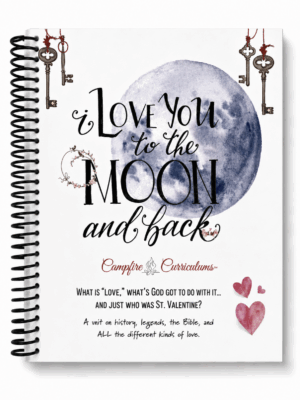
Flexible unit Valentine’s Day / Emotional Health (Digital)
Chemistry, biology, health $32.00 Add to cart -
Classic unit U.S. Military / History (Digital)
Interdisciplinary (areonautics, chemical reactions, etc.) $37.00 Add to cart -
-
Classic unit The Season of Noels (Digital)
Physics (amplitude, pitch, resonance, decibels, anatomy of hearing, etc.) $37.00 Add to cart -
Signature unit The Holocaust (Digital)
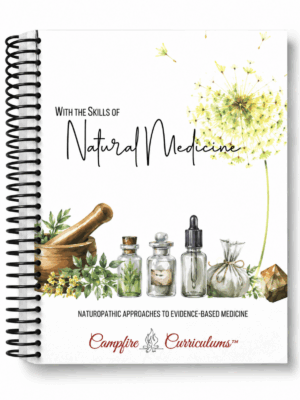
Health (circulatory system, digestive system, immune, muscular, skeletal, nervous, integumentary) $47.00 Add to cart -
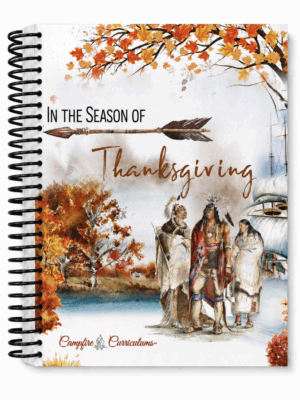
Classic unit Thanksgiving (Digital)
Biology and Earth Science (photosynthesis, pigmentation, chlorophyll, cullular respiration, ATP, etc.) $37.00 Add to cart -
Flexible unit Survive off the Land (Digital)
Biology, Agricultural Science, Environmental systems $32.00 Add to cart -
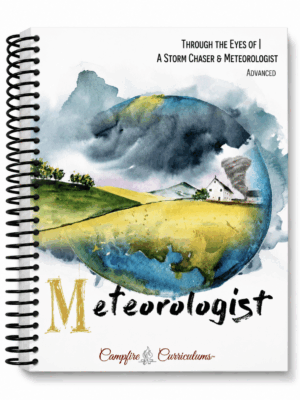
Classic unit Storm Chaser & Meteorologist (Digital)
Atmospheric science, chemistry, biology, Earth science, physics $37.00 Add to cart -
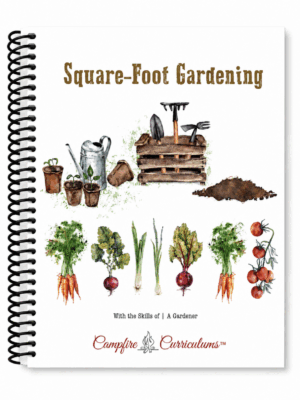
Classic unit Square Foot Gardening (DIGITAL)
Botany, Horticulture, Biology (including DNA extraction) $37.00 Add to cart -
-
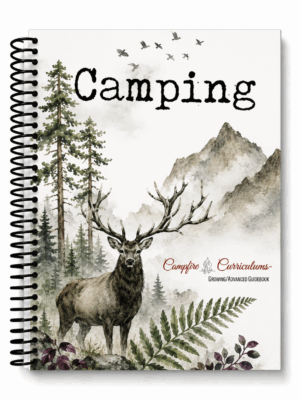
Flexible unit Skills of a Camper (Digital)
Earth science (climate zones, flora and fauna, ecological regions, etc.) $32.00 Add to cart -
-
-
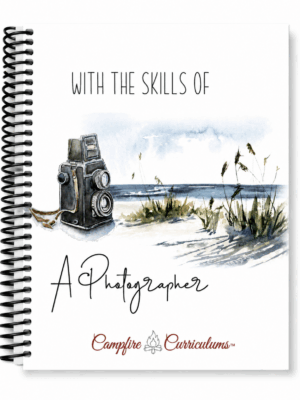
Flexible unit Photographer (Digital)
Physics and chemistry (light waves, silver halide, lens curvature, et.c) $25.00 Add to cart -
-
Signature unit Paleontologist (Digital)
Earth science, paleontology, geology, biology, taphonomy $47.00 Add to cart -
Signature unit Novel Study: A Christmas Carol (DIGITAL)
Physics (heat, conduction, convection, radiation, conservation of energy, etc.) $47.00 Add to cart -
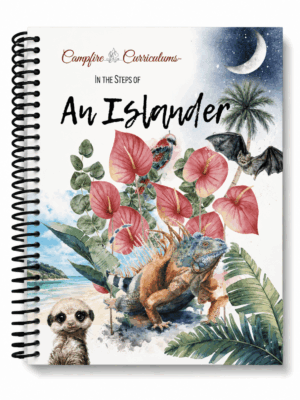
Flexible unit Island Life (Digital)
Biology (cellular structures, mitochondria, chirality, case studies, zoology, etc.), Earth Science (topography, flora, etc.) Price range: $32.50 through $52.50 Select options This product has multiple variants. The options may be chosen on the product page -
-
-
Classic unit History’s Mysteries (Digital)
Oceanography, physics, and earth systems $37.00 Add to cart -
-
-
-
-
-
-
-
-
-
Flexible unit 50 States – Western & Pacific (Digital)
Earth science (glaciers, earthquakes, hotspots, biodiversity, etc.), chemistry and lab $32.00 Add to cart -
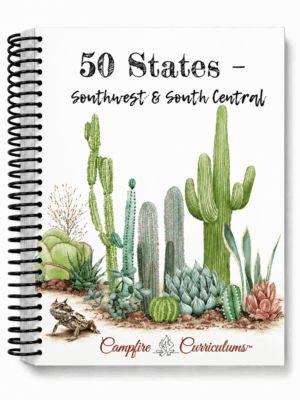
Flexible unit 50 States – Southwest & South Central (Digital)
Earth science (hoodoo, weather), Biology (zoology, ecology, etc.) $32.00 Add to cart -
Flexible unit 50 States – Southeast (Digital)
Earth & agricultural science (climates, biodiversity, weather, ecology, agriculture & ecosystems), physics, STEM $32.00 Add to cart -
Flexible unit 50 States – South Atlantic (Digital)
Integrated sciences (Earth, biology, physics), STEM $32.00 Add to cart -
Flexible unit 50 States – Rocky Mountains (Digital)
Earth science (geology, ecosystem, habitat, environmental field science) $32.00 Add to cart -
Flexible unit 50 States – New England (Digital)
Earth science, environmental science, urban planning, STEM $32.00 Add to cart -
Flexible unit 50 States – Midwest/ Great Lakes (Digital)
earth science (freshwater ecology, weather systems, stratification, etc.) $32.00 Add to cart -
Flexible unit 50 States – Midwest & Great Plains (Digital)
Earth science, biology, environmental science, physics, STEM $32.00 Add to cart -
Flexible unit 50 States – Mid Atlantic (Digital)
Earth science, environmental science, urban planning, STEM $32.00 Add to cart -



















Have questions?
Here are a few of the most common ones we hear from families just like yours.
Because Campfire is integrated, the science credit doesn't need a specific name right away. Many families temporarily list the course as "Integrated Science" while their student is still working through high school.
When your high schooler is ready to graduate, you can separate those credits. They naturally fall into biology, chemistry, foundational physics, and applied science. Some units will also directly apply to health or pre-med.
Another option: list a specific science course and award partial credit per unit, as shown on each product page. For example:
Biology — 1/6 credit for Holocaust
Over time, those partials add up. Your simplest approaches:
- Option 1 — Use "Integrated Science," then separate credits into subjects once the student is approaching graduation (biology, chemistry, foundational physics, etc.).
- Option 2 — Keep "Integrated Science" permanently. Many public and private schools now do this intentionally — Integrated Science 1, 2, 3, 4.
- Option 3 — Track each unit under a specific science category and award partial credit as you go along.
All approaches work. US transcripts use the Carnegie method (credits based on time spent in a subject). Visit the High School & Newcomer page for more.
Great question! Many parents of younger students opt to complete that unit on its own, pausing other subjects for the duration.
Older students may layer it on top of a regular unit — think "Finance Fridays" or 20 focused minutes a day. Set a timer, stop when it goes off, and it can carry you throughout the year.
Yes. Our Classic units come from our original catalog when the units were structured differently. They include a gentler Core Connections Companion for full subject coverage (except math) and will take less time to complete than our Signature units. They are also organized slightly differently.
Our Signature units carry our deepest, most comprehensive coverage. We plan to move all units into the Signature category over time, and if that happens, you'll receive the Signature version FREE of charge if you purchased Classic.
Check out our History pathway — it shows you exactly how to approach sequence! For any similar questions about structuring your high school years, the High School & Newcomer page lays out everything you need.
“The story format and hands-on activities made complex information understandable and enjoyable for all my kids and ages. I highly recommend!”