




This Unit Includes:
12 Lessons | 4 weeks | All Ages (K–12) | Single-Subject | No Teacher’s Manual Required
This unit places serious science at the center of one of the most intense environments in the world: the emergency room. Guided by real ER professionals, students study human biology and anatomy through high-stakes, real-life scenarios. Instead of memorizing systems in isolation, they see how the brain, heart, lungs, blood, and immune system function together when seconds matter.
We take you behind the scenes of an emergency room, with real insider knowledge, hands-on experiences, and powerful stories that bring the world of medicine to life. Guided by real ER professionals, students will gain a new respect for the highs, lows, and split-second decisions that happen every day in this critical field.
⚠️ Please note: This unit includes sensitive content surrounding life-and-death scenarios and is not suitable for younger or particularly sensitive children. We’ve intentionally excluded a pre-reader/Early Learner version for that reason.
Students Will Study:
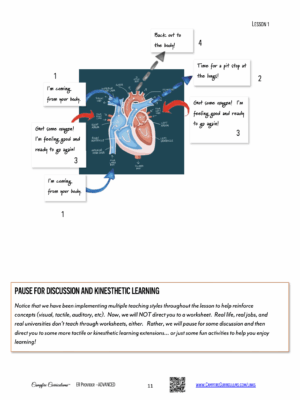
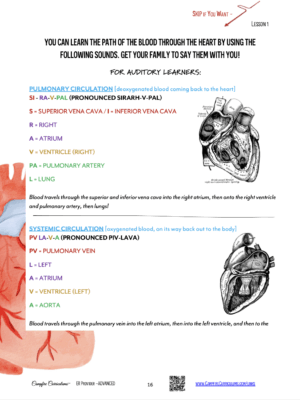
• Cardiovascular function through hands-on CPR and cardiac response
• Neuroanatomy and traumatic brain injury
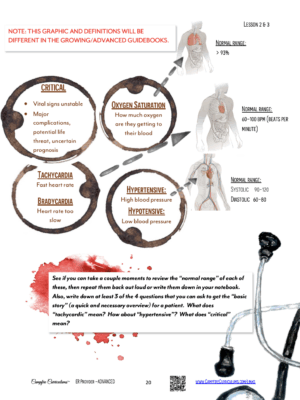
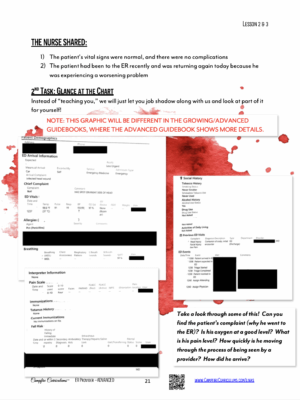
• Trauma care, diagnostics, and emergency procedures
• Bloodwork, labs, and what biomarkers reveal
• Differential diagnosis and clinical reasoning
• Field-response situations and crisis decision-making
They’ll even get to participate in medical rounds, take personality tests to explore medical roles, and walk through case-based simulations that feel like real job shadowing.
This isn’t just science, it’s real-world biology and anatomy in action, brought to life through experiential activities and meaningful family discussion. This is structured, transcript-worthy biology and anatomy—taught through application, analysis, and story.
Each lesson builds on the former, so your student grows in confidence as the lessons unfold. By the end, they’ll have a working knowledge of ER operations, medical language, and the emotional depth of the profession… all while your family bonds over incredible conversations and shared learning.
Whether your student dreams of a future in medicine or just loves to learn through high-stakes, real-life stories, this is a journey they’ll never forget.
A note about this unit:
This is an intentionally focused, single-subject unit designed to stand on its own.
High school families may document this unit as shown on the course coverage/transcript/credit tabs above.
This is a Full Unit, designed for the whole family to use together, whether you have one student or many. It includes 12 flexible lessons, typically stretched over 4–6 weeks (depending on your pace).
Most families complete 6–8 units per year. Think of one unit like a single “chapter” in a year-long curriculum.
This isn’t one-lesson-per-day curriculum. Each lesson may span multiple days. You set the rhythm.
Every unit is delivered as a PDF digital download, so you can start instantly. Prefer a printed book? You can get that, too! Want to understand all your print options? Flip to the “Print or Digital” page in our BROCHURE for a full breakdown of how to access print copies.
There are digital guidebooks:
- Growing Guidebook (elementary through middle school)
- Advanced Guidebook (high school to adult)
The Growing and Advanced Guidebooks share the same main lesson content. The difference is in the sidebars—color-coded and tailored by age. Think of it like reading the same Bible translation, but one has deep apologetics notes and the other has gentle prompts and kid-friendly commentary. Same core text, just age-adjusted insight.
This is intentionally designed to mimic higher-level education and real-world learning. You won’t find a separate teacher’s manual or student workbook because we don’t believe in busywork. Instead, each guidebook is written directly to the student (and the parent learning alongside) with real instruction, interactive prompts, and a flow that mirrors real-life, higher-level learning.
You’ll see natural cues like “Do this now,” “Write this in your notebook,” and “Pause to discuss,” built right into the lesson. Students learn through notebooking, narration, dictation, and hands-on exploration—no pre-planning required. It might feel different at first. That’s because it is… and it’s intentional.
There is no Core Connections Companion.
Campfire encourages students to think deeply, not just check boxes. That means we don’t ask for rote answers; we ask for reflection, connection, and real understanding. For students used to worksheet-style learning, this can come as a shift. You might notice a transition phase as their brain adjusts to a higher level of engagement, and that’s part of the growth.
Some younger learners (especially ages 6–8) may need extra support or time. It depends on the child. If your student is used to rich read-alouds and open discussion, they may jump right in. Others might benefit from starting with just the Early Learner Guidebook or waiting for Campfire until they’re ready for more independent thinking.
We’ve seen some 7-year-olds fall in love with it. Others needed to wait until 9 to tackle everything comfortably. You know your child best, and this curriculum gives you the freedom to meet them right where they are.
Each unit includes access to our private LINKS page with videos, supply lists, book lists, and bonus resources—everything pre-screened and organized for easy use. Some units also have optional MP3 add-ons for auditory learners.










Faith Lizyness (verified owner) –
My 7th grader really enjoyed this unit and loved all the hands on activities. I really liked how it profiled jobs in the medical field.