
Your child will
think like a historian.
Every Campfire history unit goes beyond the textbook. Students read directly from historical documents, analyze conflicting accounts, and build a defensible position. Geography, economics, ethics, and social studies are connected throughout, for full immersion and context.
My kids HATED history before we found Campfire. Their momma did too. Now they fight over which unit to do next. – Stacey L.
How Campfire Teaches History Differently
How Campfire Teaches History Differently
Campfire does not teach history as “memorize the textbook and trust the official story.” We put students directly in front of primary and secondary sources (journals, letters, newspapers, speeches, court records, government documents, inquiries, etc.) and teach them how to interrogate the source.
Who said this? Why? What was left out? Who benefits from this version? What conflicts with it? What evidence actually exists or supports the claim?
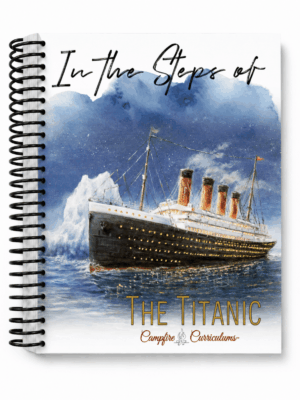
Our Titanic unit is a great example. We don’t just repeat the widely accepted claims and run with them. We go to the inquiries, look at conflicting data, and challenge assumptions. We spend hundreds of hours researching before putting pen to paper (or—you know—finger to keyboard).
We talk about how the news and media shaped public understanding. And most importantly, we make the larger point: do not blindly trust everything you are told. But also… do weigh the evidence, so that you don’t walk around lost.
We do not treat every theory as equally proven or equally supported. Students can’t go through life trusting everything, trusting nothing, or falling into rumors and traps.
We teach students to ask better questions. “What do you believe about this?” is not enough. We want students asking, “What evidence convinced me? What sources shaped my opinion? Where did those sources come from? What would change my mind?”
That is the heart of how Campfire teaches history: not blind acceptance, cynicism, or just theories, but disciplined discernment.
Critical thinking without agenda.
A note on units that teach history directly (like Independence Day): Campfire does tell the story, but only after weighing primary and secondary sources. We show students the conflicting ideas, present pointed discussion questions, and use primary source activities so they can feel the conflicting data and learn how historians determine what carries more weight. This is done throughout the Boston Massacre, the Boston Tea Party, and more.
Real customer photos from Campfire families from our FB page.
I did this with my teen and 10 year old, and I will tell you that it was one of the most exceptionally done history that I have taught to date. I grew up with a History professor dad, graduated college with a history minor and teach history at our co-op. I know a LOT about history, and I learned so much doing this curriculum this year. Different points of views were expressed and it taught the kids how to be historians. It taught them how to get pieces of information and form opinions, but then hear MORE, thus possibly leading to a change of opinion. It taught them to look at things critically, research and collect more. I was blown away by this curriculum… Chrissy R.
*Scroll left/right — or click HERE for the printable version.*




How to Count Credits
Choose any of the units from the list. Think of each unit like an oversized chapter in a year-long course. You complete multiple “chapters” to earn 1 full credit by the end of the year. Because each full unit covers multiple subjects, you can earn a credit in each school subject.
Use it your way:
- All-in-one: Use the main guidebook + Core Connections Companion when included.
- Single subject: Use the guidebook on its own.
- Full-year credit: Choose about 8 units per year (or 4 per year semester). ~8 units = 1 full credit in each subject (history/social studies, science, ELA, geography, ethics, Bible, and elective).
Most families can cover the year in about 8 units — all ages and subjects except math — and still land under $400. Mix and match as desired.
Other curriculum charges by age bracket: if you have three kids at different stages, you’re buying it three times (and again when the next sibling catches up). Campfire is one purchase, used by every child in your home, at every age, indefinitely.
I’m not sure I could express in a short enough post here the gratitude I have for the creators. Through this, my husband and I were able to talk to our kids about some really, really hard things. They were taught about some of the most horrific evils of this world but also about the grace and forgiveness that could only come through surrender to the Lord. I loved the way Campfire ended the unit, and so I’ll end my post with their final note: “Evil is real, as the Bible points out. It’s around us, and this unit makes it evident. But in Christ, there is an everlasting, anchoring hope. It’s not a wish for something better; it’s a hope rooted in a definite promise we know is coming. CLING TO THAT!” Ashley P.
-

-
-
-
Flexible unit Valentine’s Day / Emotional Health (Digital)
Integrated world history $32.00 Add to cart -
-
-
-
-
-
-
-
Classic unit Square Foot Gardening (DIGITAL)
Integrated American History and history of farming $37.00 Add to cart -
-
-
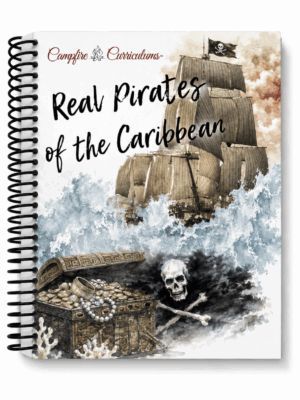
Flexible unit Real Pirates (Digital)
Age of Piracy Price range: $20.00 through $52.50 Select options This product has multiple variants. The options may be chosen on the product page -
Classic unit Professional Chef (Digital)
History of culinary arts across the world $37.00 Add to cart -
-
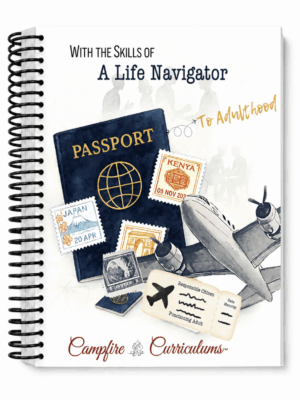
Signature unit Passport to Adulthood (Digital)
Integarted world history and social studies $47.00 Add to cart -
-
Signature unit Novel Study: A Christmas Carol (DIGITAL)
Georgian and Early Victorian Era $47.00 Add to cart -
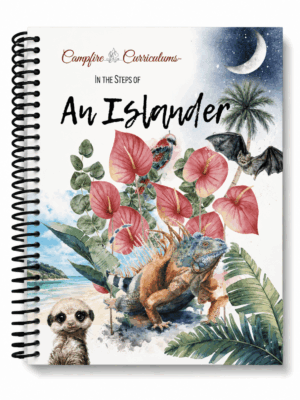
Flexible unit Island Life (Digital)
American History: Age of Piracy and expansion Price range: $32.50 through $52.50 Select options This product has multiple variants. The options may be chosen on the product page -
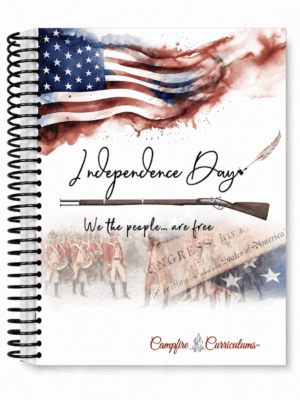
Flexible unit Independence Day / 4th of July (digital)
American History: Revolutionary War (and before) $32.00 Add to cart -
-
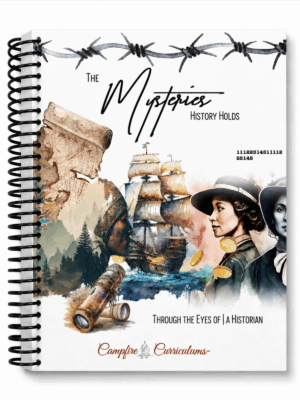
Classic unit History’s Mysteries (Digital)
Integrated World History & American History $37.00 Add to cart -
-
-
-
-
-
-
Flexible unit 50 States – Western & Pacific (Digital)
American: colonization, Westward expansion, gold rush, rise of technology $32.00 Add to cart -
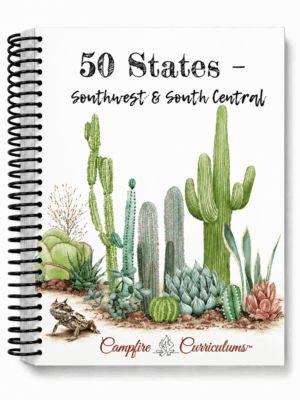
Flexible unit 50 States – Southwest & South Central (Digital)
American History: Indigenous, Spanish, and Westward Expansion $32.00 Add to cart -
Flexible unit 50 States – Southeast (Digital)
American History: indigenous, European colonization, Reconstruction, Civil Rights, $32.00 Add to cart -
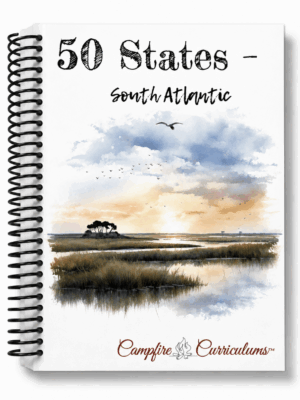
Flexible unit 50 States – South Atlantic (Digital)
American History: Colonization & American Revolution, Civil War $32.00 Add to cart -
Flexible unit 50 States – Rocky Mountains (Digital)
American History: Westward expansion $32.00 Add to cart -
Flexible unit 50 States – New England (Digital)
American History: Colonization & American Revolution, Civil War $32.00 Add to cart -
Flexible unit 50 States – Midwest/ Great Lakes (Digital)
American History: indigenous, frontier life, immigration, labor history $32.00 Add to cart -
Flexible unit 50 States – Midwest & Great Plains (Digital)
American History: Westward expansion, Indigenous history $32.00 Add to cart -
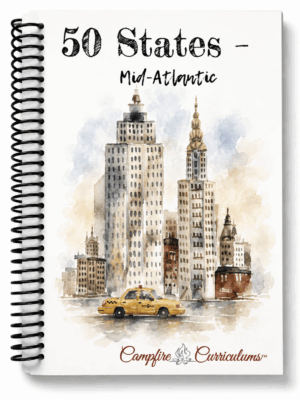
Flexible unit 50 States – Mid Atlantic (Digital)
American History: Colonization & American Revolution, Civil War $32.00 Add to cart -


















Have questions?
Here are a few of the most common ones we hear from families just like yours.
Because Campfire is integrated, the science credit doesn't need a specific name right away. Many families temporarily list the course as "Integrated Science" while their student is still working through high school.
When your high schooler is ready to graduate, you can separate those credits. They naturally fall into biology, chemistry, foundational physics, and applied science. Some units will also directly apply to health or pre-med.
Another option: list a specific science course and award partial credit per unit, as shown on each product page. For example:
Biology — 1/6 credit for Holocaust
Over time, those partials add up. Your simplest approaches:
- Option 1 — Use "Integrated Science," then separate credits into subjects once the student is approaching graduation (biology, chemistry, foundational physics, etc.).
- Option 2 — Keep "Integrated Science" permanently. Many public and private schools now do this intentionally — Integrated Science 1, 2, 3, 4.
- Option 3 — Track each unit under a specific science category and award partial credit as you go along.
All approaches work. US transcripts use the Carnegie method (credits based on time spent in a subject). Visit the High School & Newcomer page for more.
Great question! Many parents of younger students opt to complete that unit on its own, pausing other subjects for the duration.
Older students may layer it on top of a regular unit — think "Finance Fridays" or 20 focused minutes a day. Set a timer, stop when it goes off, and it can carry you throughout the year.
Yes. Our Classic units come from our original catalog when the units were structured differently. They include a gentler Core Connections Companion for full subject coverage (except math) and will take less time to complete than our Signature units. They are also organized slightly differently.
Our Signature units carry our deepest, most comprehensive coverage. We plan to move all units into the Signature category over time, and if that happens, you'll receive the Signature version FREE of charge if you purchased Classic.
Check out our History pathway — it shows you exactly how to approach sequence! For any similar questions about structuring your high school years, the High School & Newcomer page lays out everything you need.
“This was a hit for all my kids, elementary through high school age! History is fascinating and they loved being the historian evaluating the evidence and trying to solve the mysteries. Their only complaint – they want this unit to become a series so there are more mysteries to learn about.”