


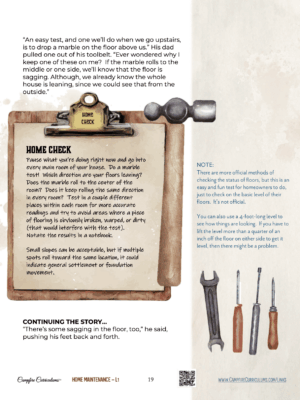
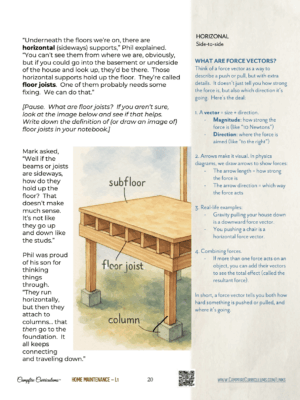
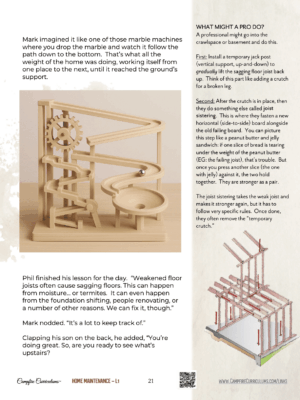
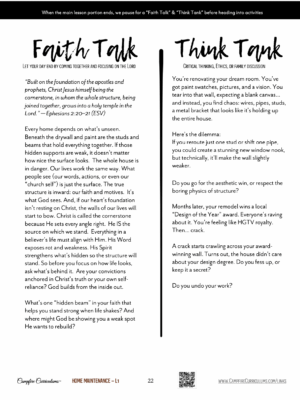


This Unit Includes:
12 Lessons | 4 – 6 weeks | All Ages | Multi-Subject | No Teacher’s Manual Required
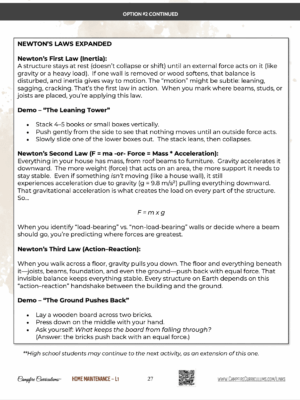
Why do pipes burst in winter? Why does the hot air rise? Why don’t walls collapse under weight?
Most of us were never actually taught those answers in a way that stuck.
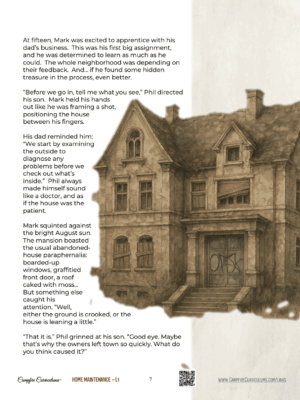
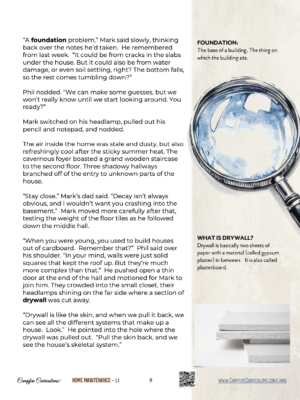
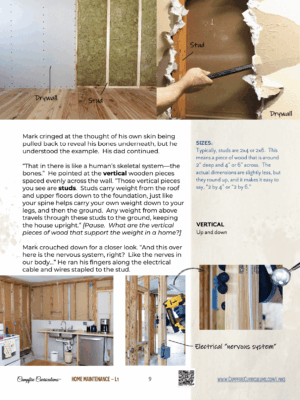
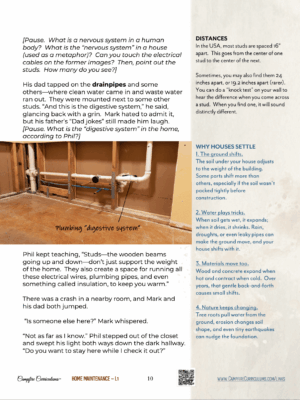
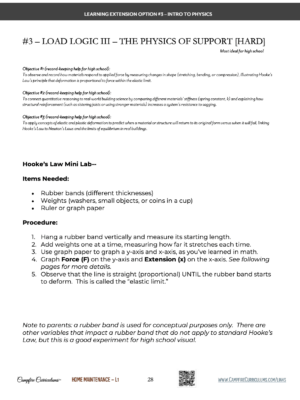
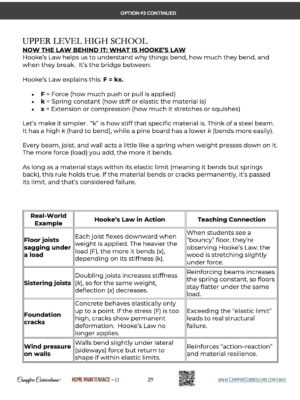
Home Maintenance takes something your kids see every single day (a house) and teaches the science behind it: energy, pressure, force, flow. ..
Your younger kids follow the lesson and build understanding step by step.
Your older kids stay in the same lesson but go deeper.
They start asking:
– What happens when load shifts?
– Why does flow matter in electrical, air, and water systems?
– How do you know when a structure will hold… and when it won’t?
And you don’t need a separate teacher’s manual to make that happen. It’s all there. You just open the page and follow it.
By the end of this unit, your kids won’t just “know about houses.”
They’ll actually understand how systems work.
They’ll see cause and effect.
And, they’ll be able to explain what’s happening around them instead of memorizing it for a week and forgetting it.
And yes… they’ll be more capable in real life, too—learning skills that actually impact their day-to-day lives.
High school families may document this unit as shown on the course coverage/transcript/credit tabs above.
Core Connections (quick view):
Language Arts: Spelling focus
Core Connections History: Mid 1800s – 1900s America
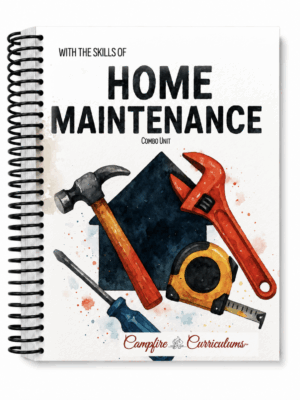
COMBO GUIDEBOOK: 208 pages
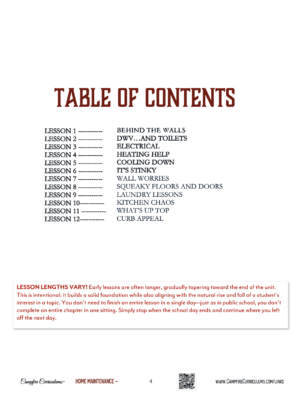
This is a Full Unit, designed for the whole family to use together, whether you have one student or many. It includes 12 lesson unit (flexible lesson lengths), typically stretched over 4 – 6 weeks (depending on your pace).
Most families complete 6–8 units per year. Think of one unit like a single “chapter” in a year-long curriculum.
This isn’t one-lesson-per-day curriculum. Each lesson may span multiple days. You set the rhythm.
Every unit is delivered as a PDF digital download, so you can start instantly. Prefer a printed book? You can get that, too! Want to understand all your print options? Flip to the “Print or Digital” page in our BROCHURE for a full breakdown of how to access print copies.
There are two digital guidebooks:
• Combo Guidebook (elementary through adult)
• Core Connections Guidebook (all ages, other school subjects)
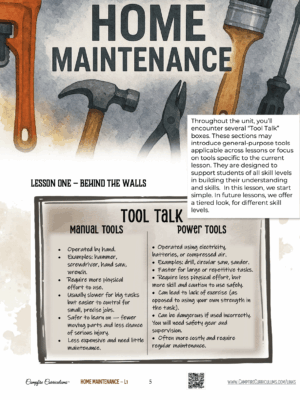
The Combo Guidebook has content for all ages, with differences for older students in the sidebars—color-coded and tailored by age. Think of it like reading the same Bible translation, but one has deep apologetics notes and the other has gentle prompts and kid-friendly commentary. Same core text, just age-adjusted insight.
This is intentionally designed to mimic higher-level education and real-world learning. You won’t find a separate teacher’s manual or student workbook because we don’t believe in busywork. Instead, each guidebook is written directly to the student (and the parent learning alongside) with real instruction, interactive prompts, and a flow that mirrors real-life, higher-level learning.
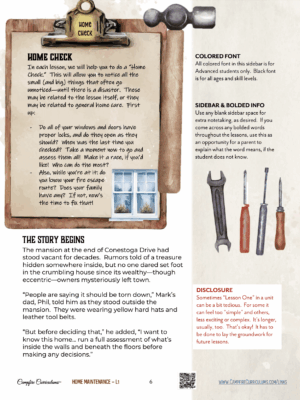
You’ll see natural cues like “Do this now,” “Write this in your notebook,” and “Pause to discuss,” built right into the lesson. Students learn through notebooking, narration, dictation, and hands-on exploration—no pre-planning required. It might feel different at first. That’s because it is… and it’s intentional.
Includes a Core Connections Companion, which dives deeper into academics across subjects, specifically integrating with the main unit topic. This is how you cover all your core subjects except math. That includes history, language arts, or more. For transcript and syllabus help, see the tabs directly above.
Campfire encourages students to think deeply, not just check boxes. That means we don’t ask for rote answers; we ask for reflection, connection, and real understanding. For students used to worksheet-style learning, this can come as a shift. You might notice a transition phase as their brain adjusts to a higher level of engagement, and that’s part of the growth.
Some younger learners (especially ages 6–9) may need extra support or time for this specific unit. It depends on the child. If your student is used to rich read-alouds and open discussion, they may jump right in. Others might benefit from starting with just the Early Learner Guidebook or waiting for Campfire until they’re ready for more independent thinking.
We’ve seen some 7-year-olds fall in love with it. Others needed to wait until 9 or 10 to tackle everything in this unit comfortably. You know your child best, and this curriculum gives you the freedom to meet them right where they are.
Each unit includes access to our private LINKS page with videos, supply lists, book lists, and bonus resources—everything pre-screened, organized, and organized for easy use. Some units also have optional MP3 add-ons for auditory learners.












Campfire Curriculums –
Reviews