


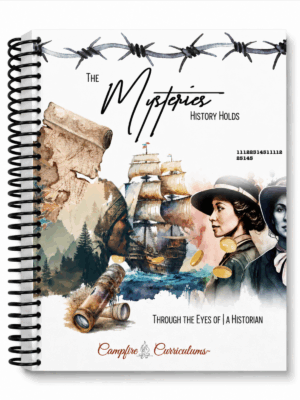
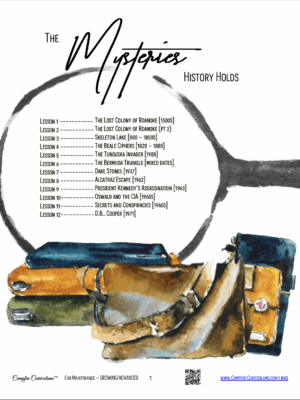


This Unit Includes:
12+ Lessons | 4 – 6 weeks | All Ages (K–12) | Multi-Subject | No Teacher’s Manual Required
What really happened… and who decides what’s true? Can you separate fact from fiction, identify reliable sources, and build your own theories?
This unit invites students to think like historians, investigating some of the world’s most captivating historical mysteries. From critical thinking to forensic science, from classified files to the art of forming theories… this one’s got it all.
Get ready to dive into:
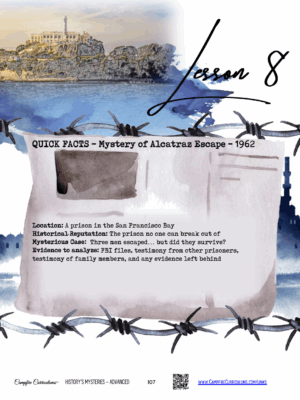
• The escape from Alcatraz
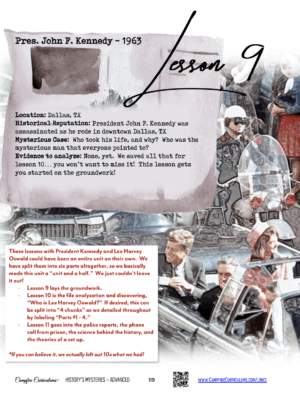
• The JFK assassination
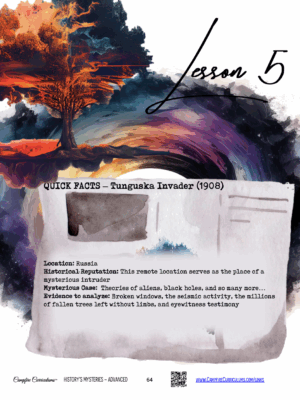
• The Tunguska explosion in Siberia
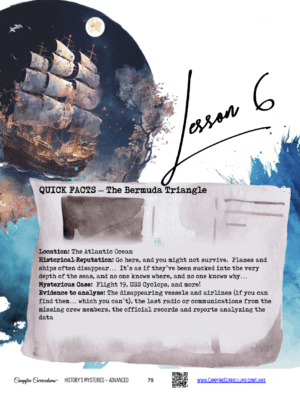
• The Bermuda Triangle
• Declassified CIA and FBI files
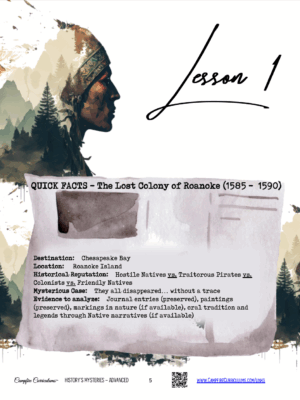
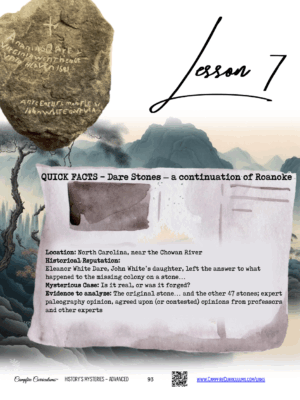
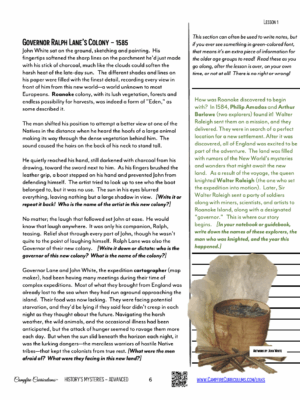
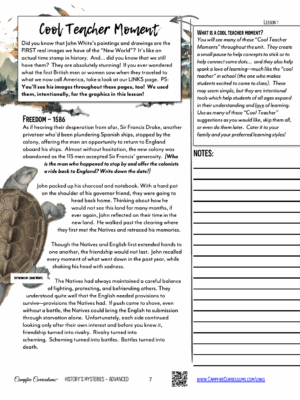
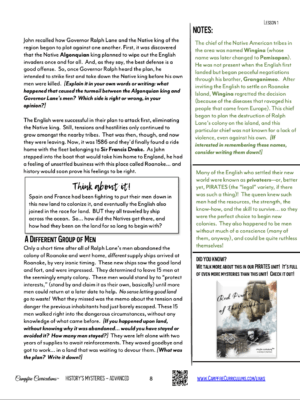
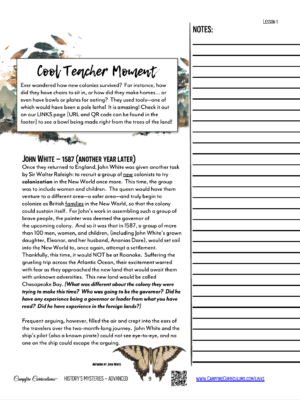
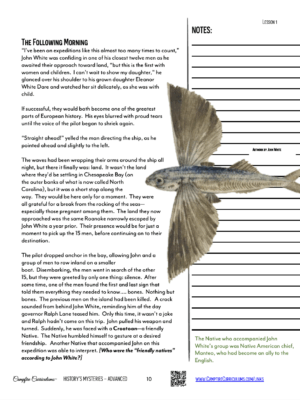
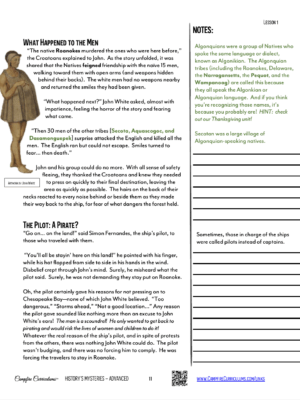
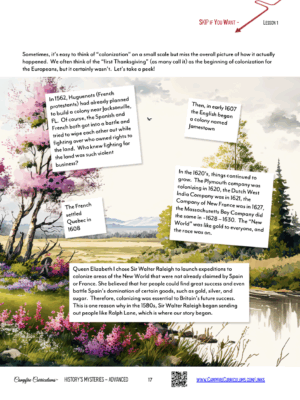
• The mystery of Roanoke
• …and much more (including surprise SYW content not listed in the table of contents!)
If you love big questions, puzzling clues, and peeling back the layers of history, this unit was made for you.
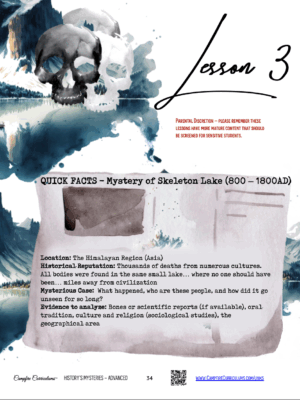
⚠️ Maturity Note: Read Before Purchasing
This unit is best suited for older or more mature students. Many mysteries in history include heavy themes: death, war, assassination, loss, and crime. While the content is handled with our usual sensitivity, the subject matter may be too intense for younger or sensitive learners.
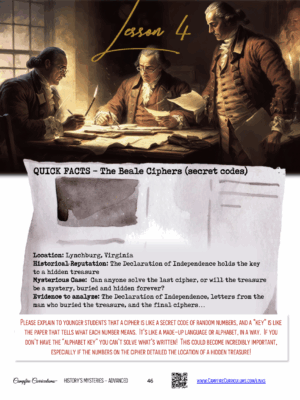
There’s also some assumed general knowledge (for example, references to things like the Declaration of Independence or the CIA). Students don’t need to know all the details, but basic awareness enhances the experience. Not familiar? That’s okay too. This unit makes a great launch point into those discussions!
CORE CONNECTIONS:
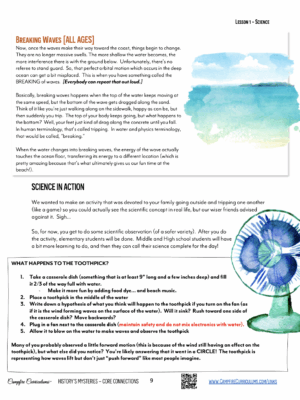
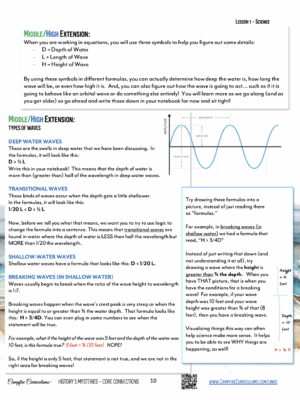
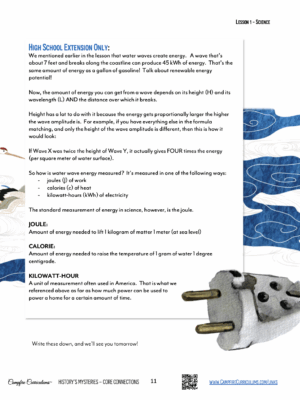
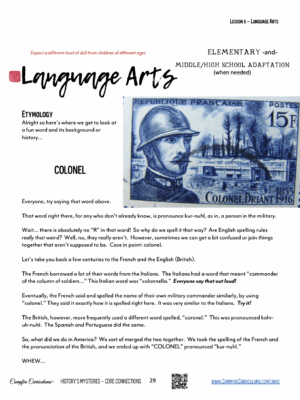
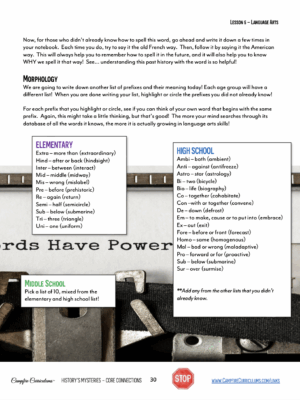
Students grow in literacy through work with etymology and morphology. Science covers oceanography, physics & earth systems.
High school families may document this unit as shown on the course coverage/transcript/credit tabs above.
This is a Full Unit, designed for the whole family to use together, whether you have one student or many. It includes 12 flexible lessons, typically stretched over 4–6 weeks (depending on your pace).
Most families complete 6–8 units per year. Think of one unit like a single “chapter” in a year-long curriculum.
This isn’t one-lesson-per-day curriculum. Each lesson may span multiple days. You set the rhythm.
Every unit is delivered as a PDF digital download, so you can start instantly. Prefer a printed book? You can get that, too! Want to understand all your print options? Flip to the “Print or Digital” page in our BROCHURE for a full breakdown of how to access print copies.
There are digital guidebooks:
- Growing Guidebook (elementary through middle school)
- Advanced Guidebook (high school to adult)
Early Learner Guidebook is NOT included, due to the sensitivity of topics.
The Growing and Advanced Guidebooks share the same main lesson content. The difference is in the sidebars—color-coded and tailored by age. Think of it like reading the same Bible translation, but one has deep apologetics notes and the other has gentle prompts and kid-friendly commentary. Same core text, just age-adjusted insight.
This is intentionally designed to mimic higher-level education and real-world learning. You won’t find a separate teacher’s manual or student workbook because we don’t believe in busywork. Instead, each guidebook is written directly to the student (and the parent learning alongside) with real instruction, interactive prompts, and a flow that mirrors real-life, higher-level learning.
You’ll see natural cues like “Do this now,” “Write this in your notebook,” and “Pause to discuss,” built right into the lesson. Students learn through notebooking, narration, dictation, and hands-on exploration—no pre-planning required. It might feel different at first. That’s because it is… and it’s intentional.
Included is a Core Connections Companion, which dives deeper into academics across subjects, specifically integrating with the main unit topic. This is how you cover all your core subjects except math. That includes history, science, language arts, geography, art, and more. For transcript and syllabus help, see the links directly above.
Campfire encourages students to think deeply, not just check boxes. That means we don’t ask for rote answers; we ask for reflection, connection, and real understanding. For students used to worksheet-style learning, this can come as a shift. You might notice a transition phase as their brain adjusts to a higher level of engagement, and that’s part of the growth.
Some younger learners (especially ages 6–8) may need extra support or time. It depends on the child. If your student is used to rich read-alouds and open discussion, they may jump right in. Others might benefit from starting with just the Early Learner Guidebook or waiting for Campfire until they’re ready for more independent thinking.
We’ve seen some 7-year-olds fall in love with it. Others needed to wait until 9 to tackle everything comfortably. You know your child best, and this curriculum gives you the freedom to meet them right where they are.
Each unit includes access to our private LINKS page with videos, supply lists, book lists, and bonus resources—everything pre-screened and organized for easy use. Some units also have optional MP3 add-ons for auditory learners.


Kaitlin Heard (verified owner) –
My daughter LOVES this unit!! So did I who am I kidding
Tristan RowLee (verified owner) –
This unit was a hit for all my kids, elementary through high school age! History is fascinating and they loved being the historians evaluating the evidence and trying to solve the mysteries. Their only complaint – they want this to become a series so there are more mysteries to learn about.