
Language Arts can be beautiful.
Note-taking is built into every lesson with specific instruction, so you don’t have to guess. Where a worksheet might say “Fill in the blank: _____,” Campfire stops mid-lesson and prompts the student to assess in the moment: “Pause. Look at the paragraph we just read. Write down _______ in your notebook.” This produces stronger written output than worksheets, and without the ceiling worksheets create.
Grammar, spelling, and writing projects are also included in the Core Connections Companion. Writing projects connect to what students are actually studying — journalism, narrative, argument, analysis, Latin roots, etc. Paragraph and essay structure is taught explicitly. Grammar is taught in context, differentiated by level.
Our ELA approach is both spiral and mastery, so concepts are revisited and reinforced throughout the units, while working toward a larger goal (such as a journalism project or public speaking project).
I majored in English Lit, and the analysis was beyond what I did in university. I was able to share it with my kids, and it was written in a way they could all understand and enjoy as much as I did! Shelly W.
How Does Our Language Arts Approach Work?
Real customer photos from Campfire families from our FB page.
I’m just so thankful we found Campfire. I had a specific vision when I started homeschooling last year and Campfire has been an indispensable resource we use to achieve that vision. My girls spend the day reading, exploring, nature journaling, going on deep dives, asking questions, and teaching one another. My 12 year old who would spend 2 hours crying and fighting through one worksheet now wakes up excited to actually start learning. She wrote an entire chapter of a book last week! Finding Campfire so early in my homeschooling journey has been such a blessing. – Lindsey R.
-

-
-
-
Flexible unit Valentine’s Day / Emotional Health (Digital)
Rhyme schemes, clerihews, quatrains, literary devices $32.00 Add to cart -
Classic unit U.S. Military / History (Digital)
Power of words, written analysis, picture studies $37.00 Add to cart -
-
Classic unit The Season of Noels (Digital)
literary imitation, letter writing exercises, poetry exploration, etymology $37.00 Add to cart -
Signature unit The Holocaust (Digital)
Journalism, analytical writing, evaluating sources $47.00 Add to cart -
-
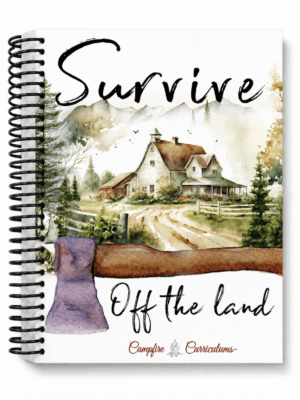
Flexible unit Survive off the Land (Digital)
Note-taking, journal writing, nature journaling $32.00 Add to cart -
-
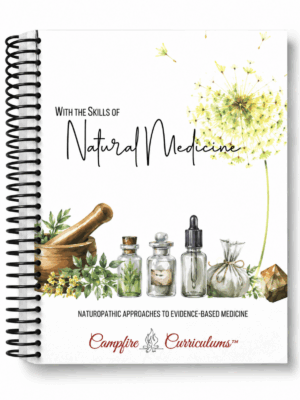
Classic unit Skills of Natural Medicine (Digital)
Evidence-based reserach report, technical vocabulary $37.00 Add to cart -
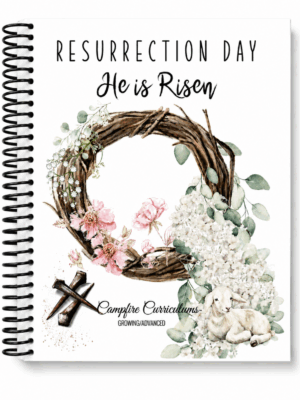
Signature unit Resurrection Day (Digital)
Literary devices (foreshadowing, symbolism, paradox, simile, motif, etc.) $47.00 Add to cart -
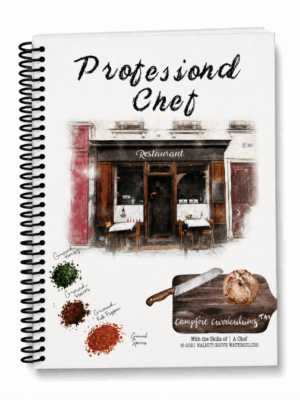
Classic unit Professional Chef (Digital)
Menu creation, persuasive pieces, word choice, vocabulary development, creative writing $37.00 Add to cart -
-
Signature unit Paleontologist (Digital)
Field guide project, Greek & Latin roots, multi-paragraph essays $47.00 Add to cart -
Orton Gillingham Phonics & Reading Program
A complete reading curriculum built on the trusted Orton-Gillingham, enhanced with the insight of tutors, psychologists, and SLPs. Paired with the warmth of classic literature. Everything you need is already built in. Price range: $99.00 through $197.00 Select options This product has multiple variants. The options may be chosen on the product page -
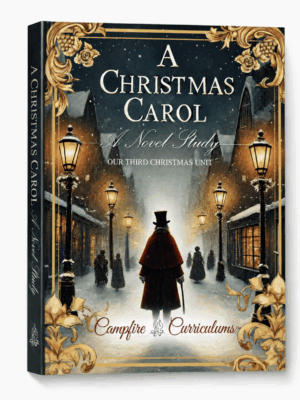
Signature unit Novel Study: A Christmas Carol (DIGITAL)
Literature study, literary analysis, composition, descriptive writing, imitation of literary voice $47.00 Add to cart -
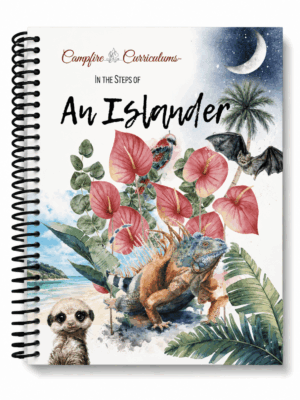
Flexible unit Island Life (Digital)
Guided note-taking, grammar, language precision, narratives Price range: $32.50 through $52.50 Select options This product has multiple variants. The options may be chosen on the product page -
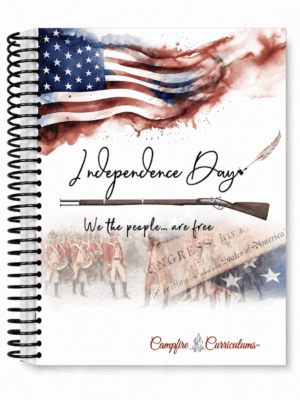
Flexible unit Independence Day / 4th of July (digital)
Rhetoricial styles, writing clarity, art study, persuasion, copywork, grammar, spelling $32.00 Add to cart -
-
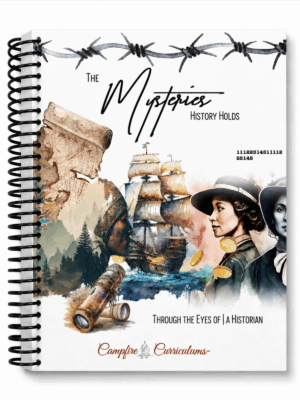
Classic unit History’s Mysteries (Digital)
Etymology, root words, prefixes, suffixes, spelling $37.00 Add to cart -
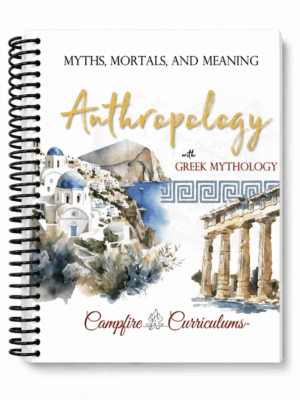
Signature unit Greek Myths & Anthropology (Digital)
Grammar mechanics, literary analysis, written response, persuasive reasoning, humanities $47.00 Add to cart -
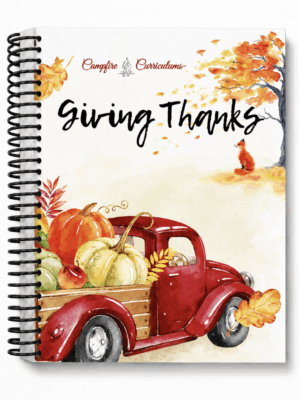
Classic unit Giving Thanks (Digital)
Journaling, gratitude letters, picture studies $37.00 Add to cart -
-
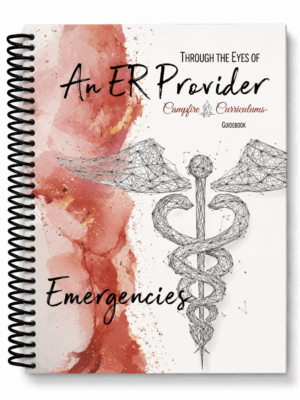
Flexible unit ER PROVIDER (Digital)
Medical journaling, emergency reports, letter writing $32.00 Add to cart -
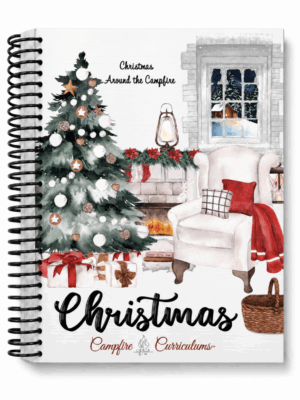
Classic unit CHRISTMAS AROUND THE CAMPFIRE (Digital)
Misc. journaling, letter writing, composition practice $37.00 Add to cart -
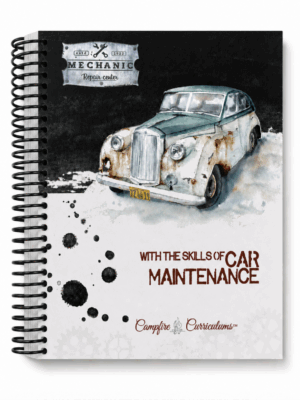
Classic unit Car Maintenance (Digital)
Grammar, vocabular, and test-taking strategies $37.00 Add to cart -
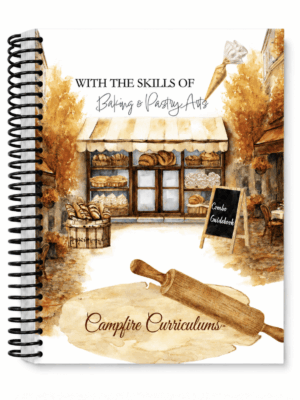
Signature unit Baking & Pastry Arts (Digital)
Persuasive writing, rhetoric, logical fallacies, grammar $47.00 Add to cart -
-
Flexible unit 50 States – Western & Pacific (Digital)
guided journaling, summaries, recall $32.00 Add to cart -
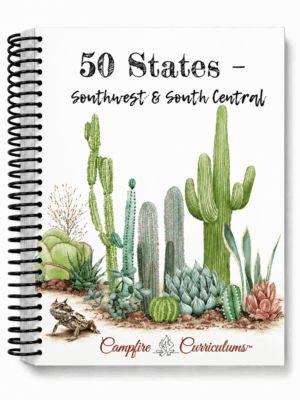
Flexible unit 50 States – Southwest & South Central (Digital)
Guided note-taking, research summaries, geological surveys and reports $32.00 Add to cart -
Flexible unit 50 States – Southeast (Digital)
Guided note-taking, regional storytelling, expressive language $32.00 Add to cart -
Flexible unit 50 States – South Atlantic (Digital)
Guided note-taking, poetry study $32.00 Add to cart -
Flexible unit 50 States – Rocky Mountains (Digital)
Guided note-taking, poetry study, $32.00 Add to cart -
Flexible unit 50 States – New England (Digital)
Guided note-taking, art study, business presentation $32.00 Add to cart -
Flexible unit 50 States – Midwest/ Great Lakes (Digital)
Guided note-taking, summaries, creative writing $32.00 Add to cart -
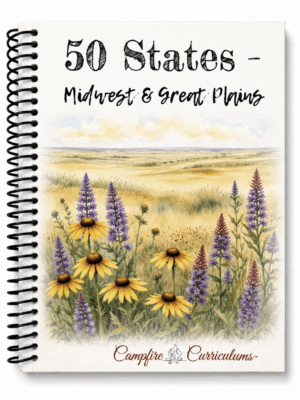
Flexible unit 50 States – Midwest & Great Plains (Digital)
Guided note-taking, research and presentation project, poetry studies $32.00 Add to cart -
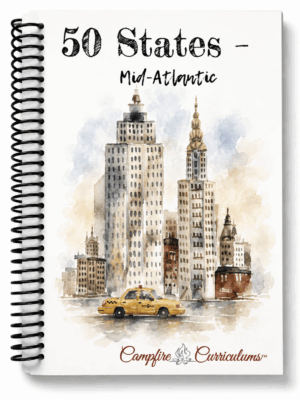
Flexible unit 50 States – Mid Atlantic (Digital)
Note-taking, urban planning presentation $32.00 Add to cart -





How to Count Credits
Choose any of the units from the list. Think of each unit like an oversized chapter in a year-long course. You complete multiple “chapters” to earn 1 full credit by the end of the year. Because each full unit covers multiple subjects, you can earn a credit in each school subject.
Use it your way:
- All-in-one: Use the main guidebook + Core Connections Companion when included.
- Single subject: Use the guidebook on its own.
- Full-year credit: Choose about 8 units per year (or 4 per year semester). ~8 units = 1 full credit in each subject (history/social studies, science, ELA, geography, ethics, Bible, and elective).
Most families can cover the year in about 8 units — all ages and subjects except math — and still land under $400. Mix and match as desired.
Other curriculum charges by age bracket: if you have three kids at different stages, you’re buying it three times (and again when the next sibling catches up). Campfire is one purchase, used by every child in your home, at every age, indefinitely.
Have questions?
Here are a few of the most common ones we hear from families just like yours.
Because Campfire is integrated, the science credit doesn't need a specific name right away. Many families temporarily list the course as "Integrated Science" while their student is still working through high school.
When your high schooler is ready to graduate, you can separate those credits. They naturally fall into biology, chemistry, foundational physics, and applied science. Some units will also directly apply to health or pre-med.
Another option: list a specific science course and award partial credit per unit, as shown on each product page. For example:
Biology — 1/6 credit for Holocaust
Over time, those partials add up. Your simplest approaches:
- Option 1 — Use "Integrated Science," then separate credits into subjects once the student is approaching graduation (biology, chemistry, foundational physics, etc.).
- Option 2 — Keep "Integrated Science" permanently. Many public and private schools now do this intentionally — Integrated Science 1, 2, 3, 4.
- Option 3 — Track each unit under a specific science category and award partial credit as you go along.
All approaches work. US transcripts use the Carnegie method (credits based on time spent in a subject). Visit the High School & Newcomer page for more.
Great question! Many parents of younger students opt to complete that unit on its own, pausing other subjects for the duration.
Older students may layer it on top of a regular unit — think "Finance Fridays" or 20 focused minutes a day. Set a timer, stop when it goes off, and it can carry you throughout the year.
Yes. Our Classic units come from our original catalog when the units were structured differently. They include a gentler Core Connections Companion for full subject coverage (except math) and will take less time to complete than our Signature units. They are also organized slightly differently.
Our Signature units carry our deepest, most comprehensive coverage. We plan to move all units into the Signature category over time, and if that happens, you'll receive the Signature version FREE of charge if you purchased Classic.
Check out our History pathway — it shows you exactly how to approach sequence! For any similar questions about structuring your high school years, the High School & Newcomer page lays out everything you need.
“This is an awesome curriculum!! We have used multiple other and none can hold a candle to the thorough fun way that they teach these things. I have some kids with dyslexia tendencies and it’s been the best!!!”